Home / Formats
Format catalogueA 20-minute Pool sit is not a Deals evening
Pick the clock before you pick a seat. Points bills leftovers. Pool spends lives. Deals ends when the count ends.
Who this ledger is for
A player who already knows 13-card grouping and now needs to choose a sit length. A first-timer who only wants to know why two tables with the same cards feel different after twenty minutes.
This is not a first-hand tutorial. Deal, group and declare live on the first-hand note. Here the unit is the format, and the question is what happens to your evening if the first drop goes badly.
Points: leftover value is the bill
On a Points table the ungrouped remainder is converted using the table's point value. A cheap leftover exit can be a short sit. A high leftover after a late invalid declare can be the most expensive ten minutes of the night.
Points rewards clean exits. It punishes the habit of holding a near-set because the story of the hand felt promising. If you cannot name the leftover cost before you buy in, you do not yet know the table.
Pool: lives, not a single bill
Pool asks you to stay inside a pot of lives. An early drop can end a planned 20-minute sit. A late recovery can stretch tea into a second hour. The skill that is rewarded is survival under a shrinking life count, not a single pretty sequence.
A player who wants a bounded evening should read the life count and the drop window before sitting. Pool is a poor choice if you need to leave at a fixed clock and cannot absorb a mid-pot chase.
Deals: the last deal is the plan
Deals prints an ending. That ending is the product. Plan conversation, stake and attention around the last deal, not the first lucky declare.
Deals can feel calmer because the count is visible. It can also trap a player who treats the middle deals as practice and only concentrates at the end. The middle deals still write the score.
Shared 13-card grammar
All three formats still deal thirteen cards. They still need a pure sequence before a valid declaration. They still treat an invalid declaration as more expensive than a timely drop. If a listing changes any of those three, treat it as a different game.
Illustrative 13-card grouping
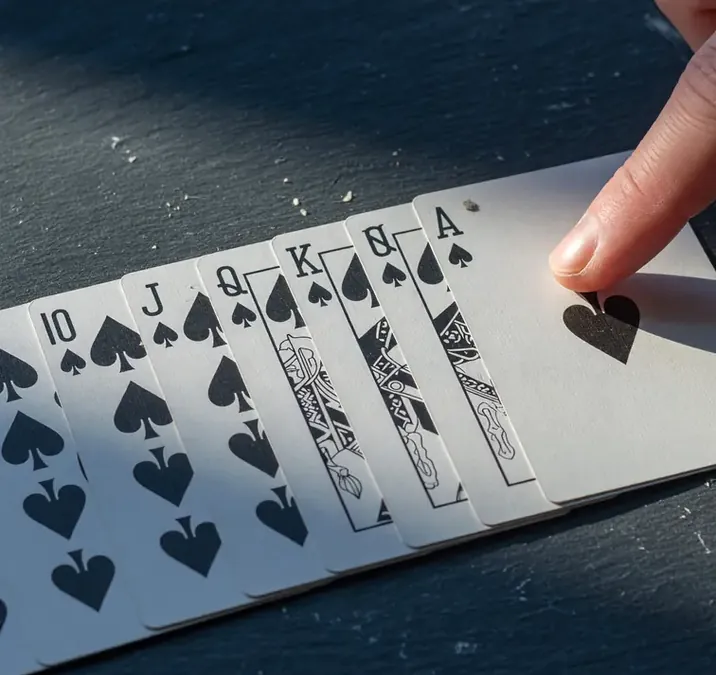
Suppose a hand holds 4-5-6 of clubs, 9-10-J of hearts, a pair of kings and four unconnected low cards. The first two runs are useful. The kings are a maybe. The four low cards are the bill on a Points table and the life risk on a Pool table.
Figures used here are illustrative only. Verify with the operator at the time of reading. The point is not the picture. The point is that ungrouped remainder is the format's tax.
Drop cost as a house variable
First-drop, middle-drop and full-count values are house text. Do not carry last month's club night onto a new listing. Read the header. If the header is missing, do not invent a number.
Table size and talk time
Two-handed tables move faster and leak more information. Six-handed tables hide more discards and stretch the clock. Choose size for the evening you actually have, not for a remembered club.
Format ledger
| Format | Win condition | Drop cost | Joker | Table size | Session feel | Skill rewarded |
|---|---|---|---|---|---|---|
| Points | Lowest leftover value | House header | Usually wild + print | 2-6 | Can be short | Clean exits |
| Pool | Last life standing | Life pot | Usually wild + print | 2-6 | 20 minutes or a chase | Survival |
| Deals | Best score after N deals | Per deal header | Usually wild + print | 2-6 | Fixed count | Even attention |
What this ledger will not do
It will not rank Easywin tables that this desk has not opened. It will not promise a winning format. It will not copy the first-hand sequence from the how-to note.
Questions that stay on this ledger
Which format ends fastest?
Points can end after one expensive leftover hand if you leave. Pool can end on an early drop. Deals last the printed count.
Do jokers work the same way?
Most Indian 13-card tables allow a printed joker and a wild from the open card. House text still wins.
What is an illustrative 13-card deal?
A hand used only to show grouping. Figures are illustrative only. Verify the live table rule when you sit.
Should beginners start in Deals?
Only if they want a known ending. Pool punishes a bad first drop more sharply.
Does Easywin publish table limits here?
No. Open the listing and read the header. This ledger is mechanical, not a live lobby.
Where does strategy start?
After the clock is chosen. Strategy limits live on a separate note.
Next task after the clock is chosen
If you still need a legal first declaration, open the first-hand note. If the clock is chosen and the next job is a discard tree, open strategy limits. If you already intend to sit, the listing is the next verb.

How a Points leftover actually becomes a bill
Imagine a hand that kept a high face card because it 'felt close' to a third king. The declare never arrives. On a Points table that leftover is converted at the table's posted value. The evening did not fail because the cards were unkind. It failed because the leftover was allowed to sit after the cheap drop window closed.
A useful habit is to name the leftover out loud before each draw. If you cannot name it, you are not playing Points. You are waiting for a story. The format ledger exists so that story does not get confused with Pool lives or a Deals count.
Pool lives as a shrinking calendar
A three-life pot is a calendar with three boxes. An early drop spends a box to buy time. A late drop spends a box because the hand was already lost. Players who treat every life as identical discover that the last life changes the table talk: opponents stop sharing information and start closing ranks.
If you must leave at a fixed hour, count whether two lives can be spent before that hour. If they cannot, Pool is the wrong clock. Move to Deals, or do not sit.
Deals attention across the middle
The first deal feels like practice. The last deal feels like theatre. The middle deals write the score. A player who only concentrates when the count is loud will donate the quiet deals. That is the specific tax of a fixed count, and it does not appear on a Points leftover bill.
Joker rules as house text, not folklore
Printed jokers and a wild from the open card are common. Some tables restrict wilds in the pure sequence. Some count a printed joker as a face value if it is left ungrouped. None of those sentences are safe to carry from last month's club night. Read the header. If the header is silent, ask before the first chip moves, or leave.
When two formats sit in one evening
Switching from Pool to Points because the first pot went badly is how a bounded night becomes an unbounded one. If you switch, write a new box. Do not spend the leftover emotion of the first format as fuel for the second.
Reading a header like a contract
A header that names Points, a first-drop value, and a wild rule is doing the job of a contract. A header that only shows a pretty chip stack is doing the job of a poster. Sit under the first. Walk away from the second.
If two tables use the same 13 cards and different headers, they are different products. Players who carry last week's drop cost into this week's listing are not loyal. They are unread.
Why table size changes information
Two-handed play leaks almost every discard. Six-handed play hides suits in other people's fingers. Choose size for the information you can actually track, not for a remembered club that seated cousins.
A tired player at a six-handed Deals table will miss a suit that left twice. That miss is not bad luck. It is a size-and-clock mismatch.
Joker folklore versus ink
Someone will tell you a printed joker always counts as zero. Someone else will tell you it is always a face. Both people are describing a house they once sat. Ink on the header beats both.
If the header is silent, ask before money moves. If no one can answer, you do not have a table. You have a shrug.
Switching formats mid-evening
The urge arrives after a bad pot. The second format then inherits the mood of the first. Write a new box or do not switch. Mood is not a buy-in.
A night that began as a 20-minute Pool sit and ended as an uncounted Points chase is a night that lost its clock. The ledger exists so you can see that coming.
Teaching formats without stealing the hand
Name the clock. Name the drop. Ask the other adult to repeat both. If they cannot, they are not ready to fund. Repeating is not condescension. It is consent.
Do not reach into their cards to 'show them Pool'. Reaching looks like collusion and teaches nothing but dependence.
What a good sit looks like after it ends
You can name the format you played, the leftover or life you spent, and the time you left. If you cannot name those three, the sit was fog. Fog is expensive.
Write those three on the same paper as the box. Tomorrow-you will thank tonight-you more than any winner board would.
When the ledger should send you away
If you came for a winning system, leave. If you came for a first-hand tutorial, open that note instead. If you came to sit without reading a header, the listing will still be there after you read one.
The catalogue is a filter. Filters are allowed to say no.